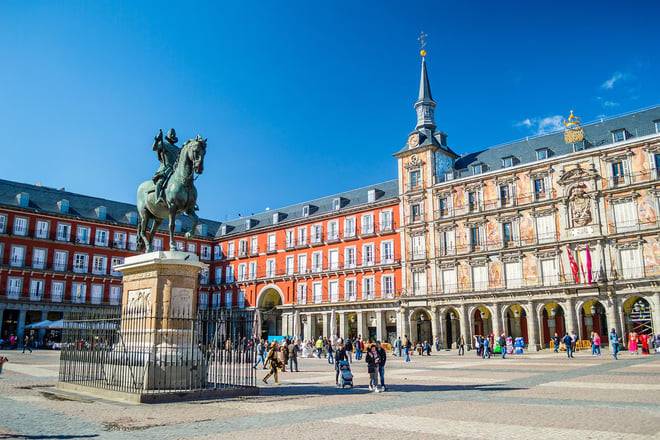
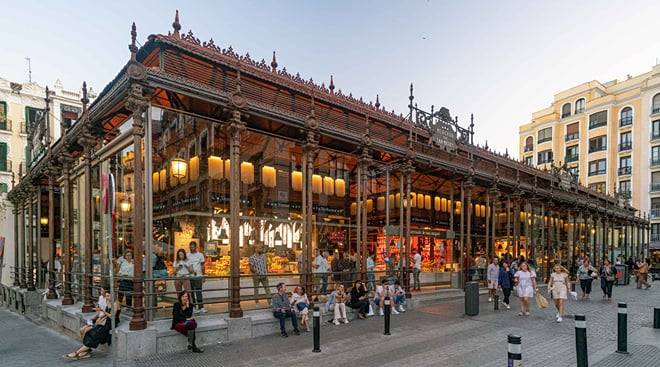
The Habsburg quarter, known as Madrid de los Austrias, preserves a dense sequence of plazas, narrow streets and façades that date from the sixteenth to the eighteenth century. Plaza Mayor, completed in 1619 by Juan Gómez de Mora and rebuilt after three fires, forms the heart of this ensemble with its continuous arcades and uniform architecture. Under those arcades history was performed: royal proclamations, public spectacles and the harsh sentences of the Spanish Inquisition. Passing the exterior of Mercado de San Miguel, the route reveals the city’s mercantile past alongside artisan workshops and period portals.
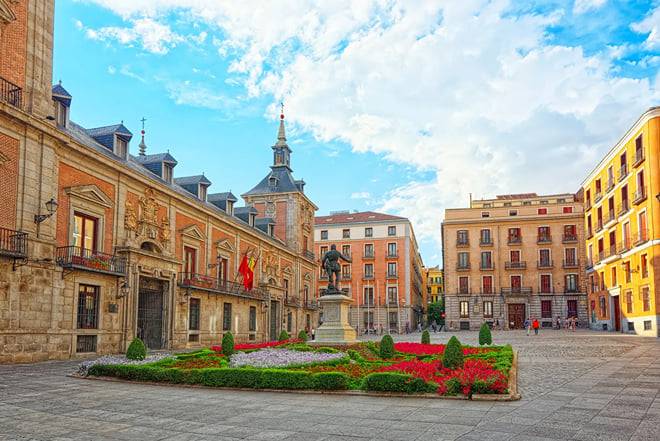
Plaza de la Villa survives as one of Madrid’s oldest corners, where the former town hall sits beside the sixteenth-century Casa de Cisneros and the fifteenth-century Torre de los Lujanes. In the evening the atmosphere changes: street lighting sculpts façades, pedestrian traffic softens and the architectural details stand out. Skilled commentary brings these places to life, explaining patronage, urban planning and the anecdotes that shaped the city. The walk invites visitors to read Madrid’s stones, to appreciate how civic space evolved and to enjoy the layered history of a capital that grew around court, commerce and ceremony. It is a concentrated cultural experience that reveals why these squares have long been the stage of Madrid’s public life.